
PMC Parts sells used genuine parts: airbags, doors, mirrors, sensors, suspension and control modules. Each part is a single item with its own photos. A buyer needs to know it fits their car before they pay, so the right part number matters more than anything else on the page.
We built three things that work together. The store buyers see, the CRM the team uses to list stock and answer buyers, and a Part Finder that helps the team get every number right.
The website
We designed and built pmccarparts.com.
- A page for every part. Each listing has its own page with photos, grade, warranty, price and product data that search engines can read. A search for the part number can land on the right page.
- Find by vehicle. Pick the year, make, model and part type to see what is on the shelf. Category pages and vehicle pages group the stock the way buyers look for it.
- Fit you can check. Where the maker's own catalogue lists the vehicles a part number fits, the part page shows that list.
- One frame for every photo. The logo bar, the OEM badge and the warranty seal are drawn by the website over a plain photo. The team uploads a clean picture and the branding appears.
- Three ways to buy. A cart with checkout on Stripe's own payment page, an enquiry form, and the phone.
- A chat that checks the shelf. The "Ask about a part" chat searches the live stock before it answers, so it cannot offer a part that is not there. If the buyer leaves a number, it reaches the CRM as a lead.
- Workshop film. Real workshop footage plays behind the headlines, graded dark so the words stay easy to read.
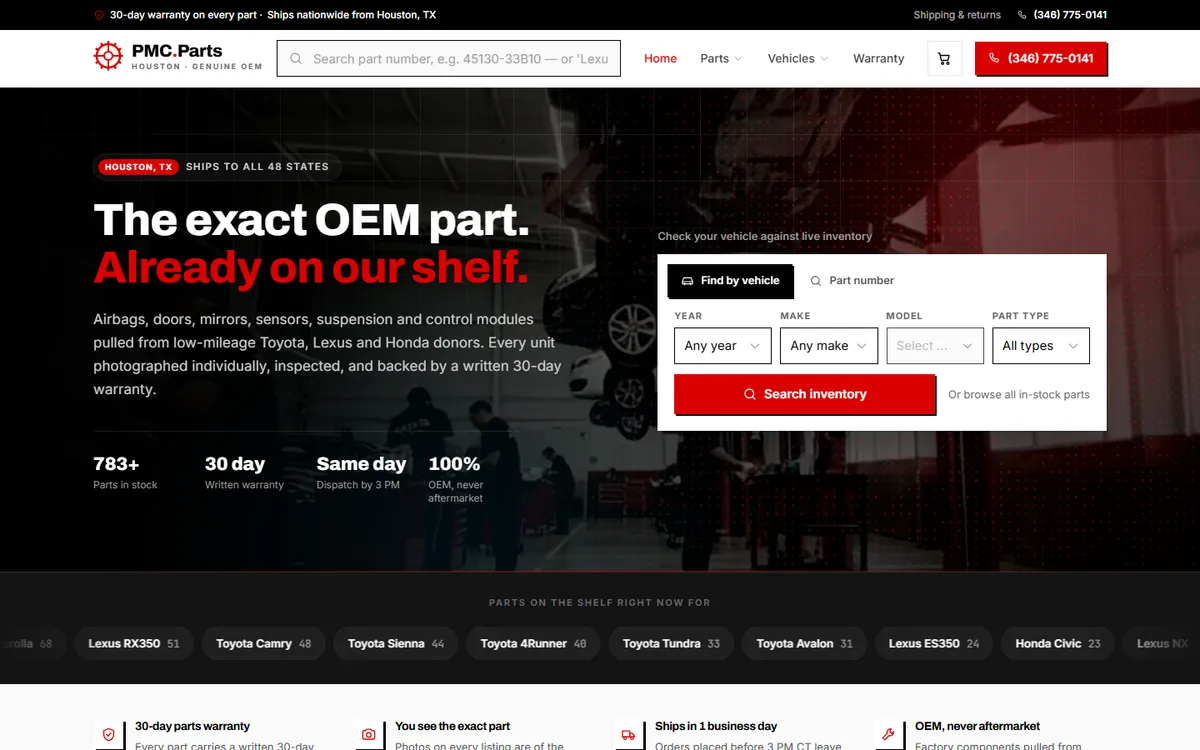
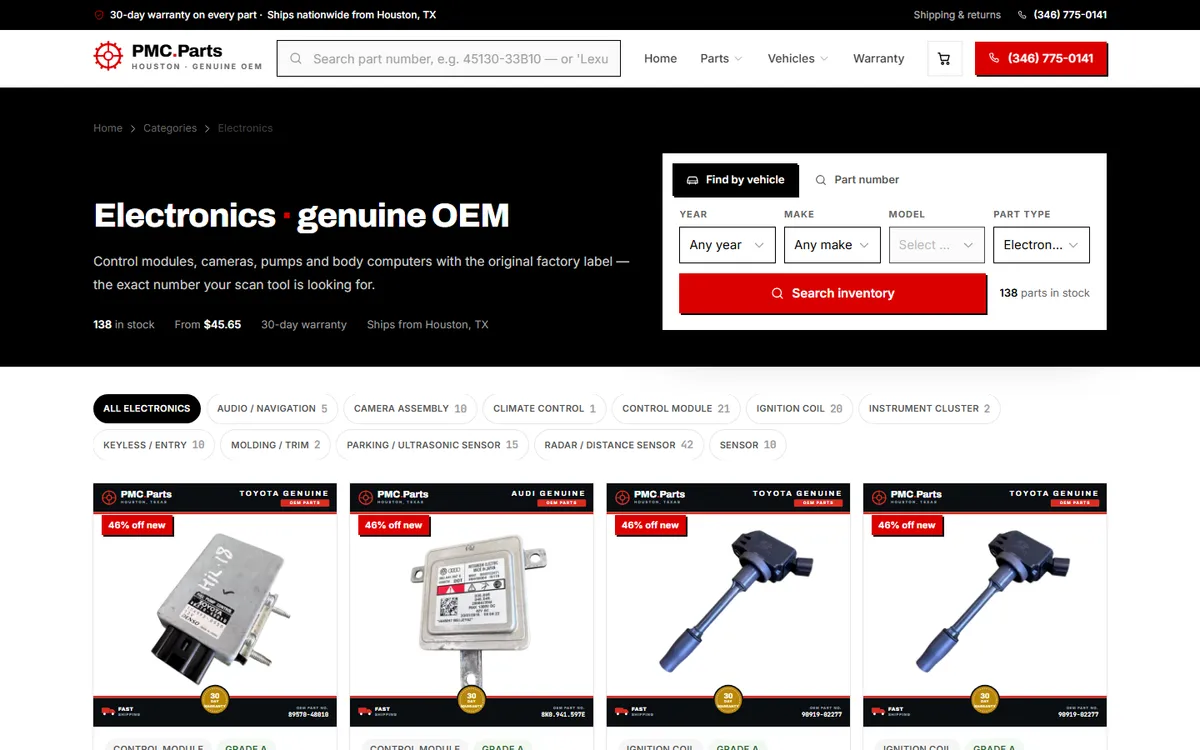
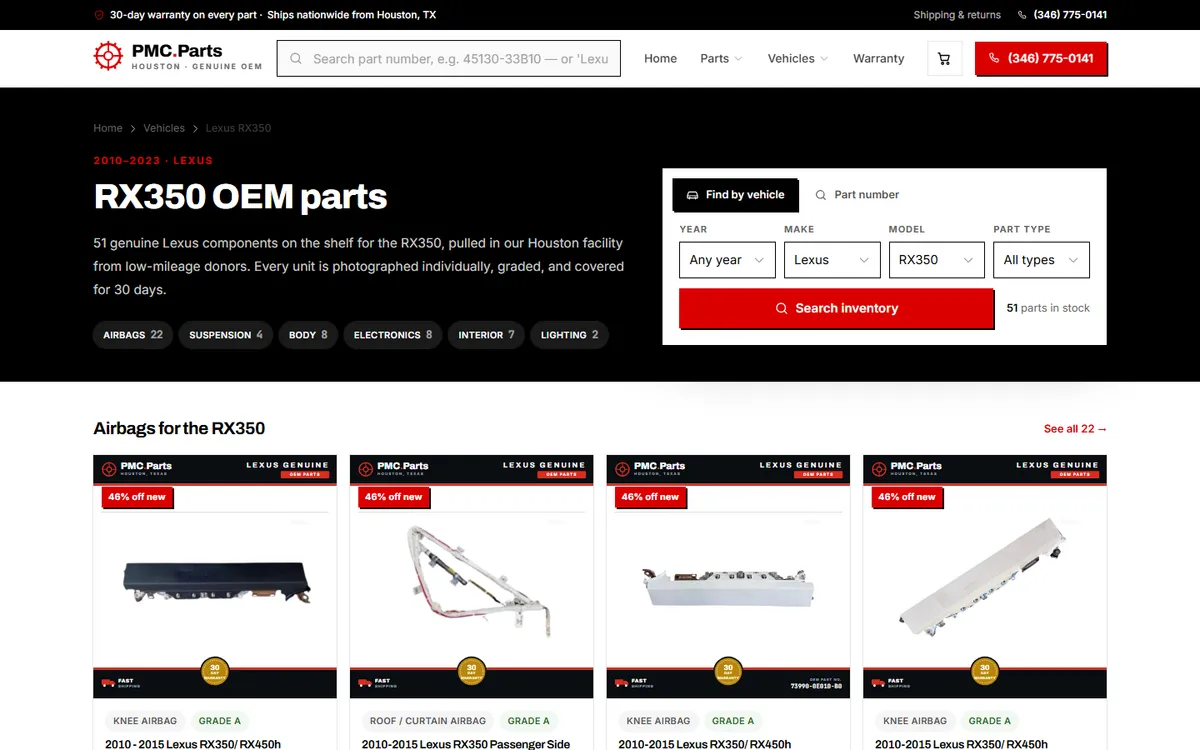
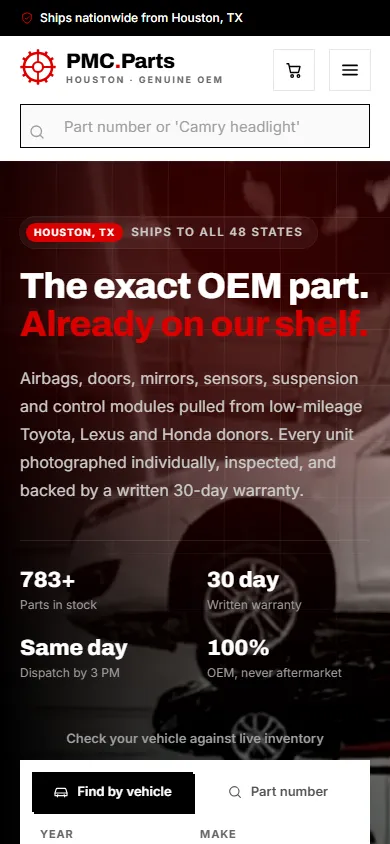
Stack: React, Vite and Tailwind, hosted on Netlify.
Screenshots of the live site, October 2026. Visit pmccarparts.com.
The CRM
The team lists new stock, answers buyers and keeps every conversation on one record.
- Parts. Add a part with photos, import many at once from a spreadsheet, search by part number and change status in bulk.
- Safe publishing. A part moves from draft to ready to published. It cannot go live without a price, a photo and a category, so a blank listing never reaches the store.
- Photos kept apart. Photos live in cloud storage and are served from there, so the store stays quick to rebuild as the stock grows.
- One record per customer. Website forms and chats land as leads. Repeat enquiries merge on the phone number, then the email. The CRM is built to add calls and emails to the same record.
- Live chat. Every chat is saved from the first message, so the team can see who asked about a part and left without a number.
- Read the labels. When two part numbers could fit, staff read the label on the shelf and confirm the number from a phone. The confirmed number flows back to the website.
- Own sign in for each person. Every team member has their own account, and access is set per person.
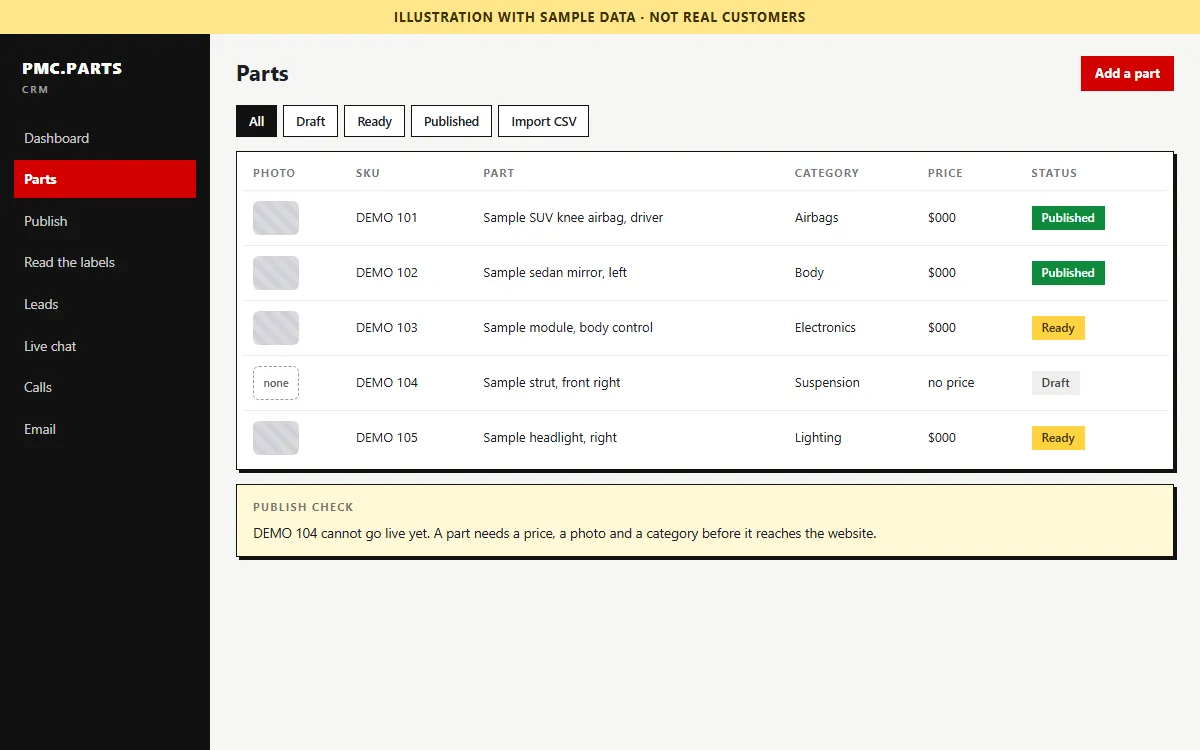
Stack: React, Vite and Tailwind, with Netlify Functions and Netlify Blobs.
The Part Finder
An internal tool for the team, behind a password. Type a part number, a stock number or a vehicle, and it shows what is on the shelf and which number each part carries.
- Confirmed or likely. Each part shows its OEM number when it is confirmed, or a short list of likely numbers when it is not.
- Fitment from the maker. It lists the vehicles the maker says each number fits, and follows a number when a newer one has replaced it.
- Sets. A listing with several pieces shows the number for each piece.
- One tap to confirm. A "Label matches" button sends the confirmed number to the CRM.
A scheduled job checks for new label reads and new stock, then rebuilds the website, the Finder and the CRM, so all three agree.
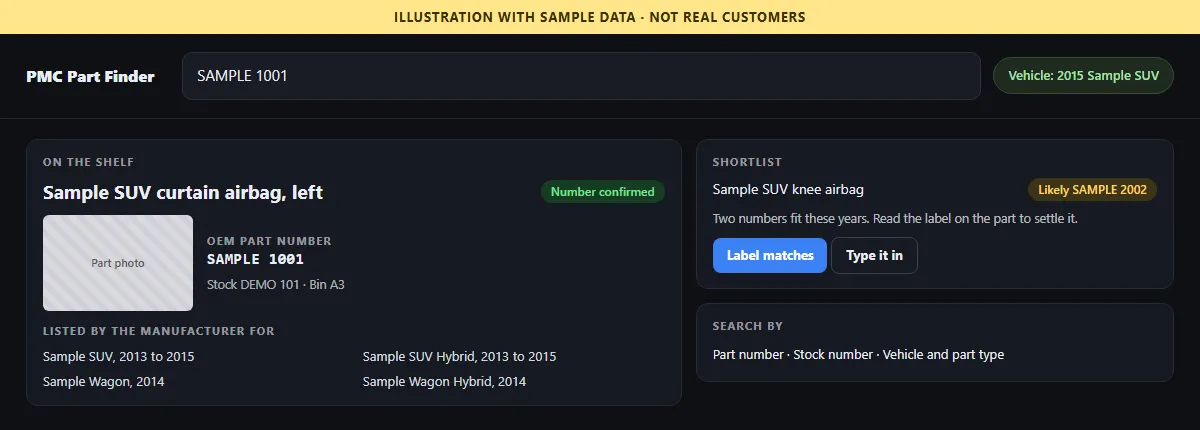
Stack: React and Vite on Netlify, behind a password, fed by Node.js scripts that read the makers' public parts catalogues.
What this means for your business
If you sell parts, or anything with a part number, buyers need to find the exact item and trust that it fits. We build the store, the system to list stock, and the tools your team needs to get the numbers right.
Message us on WhatsApp at +92 323 2802832. See our online store and website design pages, or the Perfect Fit Auto Parts case study.
Questions we get asked
Can you build a parts website with search by part number?
Yes. Each part gets its own page, so a search for the number can land on it. Buyers can also search by vehicle and part type.
Can the CRM publish parts to the website?
Yes. The team marks a part as published and the next build of the website adds it. A part without a price, a photo and a category is held back.
Can I see the Part Finder or the CRM?
Both are private to the PMC team and hold their stock and customers, so we show them as illustrations with sample data. The store is public at pmccarparts.com.
Can the chat on the website make up stock?
No. It searches the live stock before it answers, so it can only offer parts that are on the shelf.
Send us the project
Scope and price in writing within 48 hours. No obligation, and no call needed.
Looking for a job, or pitching us a service? Email info@houdini.digital instead. This form is for businesses looking to hire us.